









Each live LSAT class is taught by TWO amazing 98th+ percentile LSAT experts, on camera and ready to answer all your questions in an engaging discussion-driven format.
Have you been searching for “LSAT prep course near me”, your search is over. All the structure and accountability you crave plus the flexibility you need with unlimited class retakes and rescheduling available to you with just a few clicks.
Take the guesswork out of studying and stay on track with a personalized calendar that tells you what to study and when, with alerts so you never miss a class.
Discover your strengths and weaknesses with in-depth performance analytics. Use these insights combined with our AI-informed recommendations to create customized LSAT practice test question in your QBank.
Ready to get an amazing LSAT score?
Your 4-month access includes:

4-Month Access
LSAT Live Course
$1,299
Monthly payments available with 
*Listed price does not include required $115 fee for LSAC® LawHub™ Advantage. Exemptions may apply. Access to LawHub™ Advantage (formerly PrepPlus) is required by LSAC® for all students to access official LSAT questions and exams, even when accessed through a third party such as Blueprint Prep. Fee will be automatically added in your shopping cart. If you already purchased a LawHub Advantage subscription through LSAC, then you will have the option to remove the item from your cart before checkout.

We didn't just remove Logic Games. We added so much more content!
Sign up for our next free Live Class and see if this course is right for you!
SIGN UP NOW
Since 2005, we have taught thousands of students in classrooms across the country. Now you only need to grab your computer or mobile device to get that same expertise and hands-on instruction.
All Blueprint Live LSAT instructors scored 170 or better on an officially administered LSAT, went through extensive training in the Blueprint method, and were vetted for their ability to engage and entertain in addition to their ability to teach and answer tough questions.
MEET OUR INSTRUCTORSAfter enrollment, you’ll select class dates right from your Study Planner. But don’t worry, you can change schedules or reschedule individual lessons at any time.
Accelerated courses meet more frequently and are best suited for learners preparing for a test date in a shorter duration, and are able to devote more time each week to their course prep.
Question?
Chat with our Student Success Team
Accelerated Course
Apr 7 - Jun 2
Sun: 11:00am - 1:30pm (Pacific)
Wed: 4:00pm - 6:30pm (Pacific)
Navya &
Josh
Accelerated Course
Apr 13 - Jun 4
Sat: 11:00am - 1:30pm (Pacific)
Tues: 5:00pm - 7:30pm (Pacific)
Sean &
Brendan
Accelerated Course
Apr 15 - Jun 6
Mon: 4:00pm - 6:30pm (Pacific)
Thur: 4:00pm - 6:30pm (Pacific)
Amanda &
Jonathan
Apr 30 - Jul 16
Tues: 5:00pm - 7:30pm (Pacific)
Jacob &
Raana
May 5 - Jul 28
Sun: 11:00am - 1:30pm (Pacific)
Wed: 4:00pm - 6:30pm (Pacific)
Amanda &
Ashleigh
May 20 - Jul 29
Mon: 5:00pm - 7:30pm (Pacific)
Thur: 5:00pm - 7:30pm (Pacific)
Patrick &
Ted
Accelerated Course
Jun 1 - Aug 3
Sat: 8:00am - 10:30am (Pacific)
Tues: 4:00pm - 6:30pm (Pacific)
Navya &
Alex
Accelerated Course
Jun 9 - Aug 4
Sun: 2:00pm - 4:30pm (Pacific)
Wed: 5:00pm - 7:30pm (Pacific)
Arushi &
Bethany
Accelerated Course
Jun 17 - Aug 5
Mon: 10:00am - 12:30pm (Pacific)
Thur: 10:00am - 12:30pm (Pacific)
Sean &
Emma
May 28 - Aug 13
Tues: 5:00pm - 7:30pm (Pacific)
Amanda
May 30 - Aug 19
Mon: 5:00pm - 7:30pm (Pacific)
Thur: 5:00pm - 7:30pm (Pacific)
Auryon &
TBD
Jun 16 - Aug 28
Sun: 2:00pm - 4:30pm (Pacific)
Wed: 5:00pm - 7:30pm (Pacific)
Patrick &
TBD
Accelerated Course
Jul 8 - Aug 29
Mon: 4:00pm - 6:30pm (Pacific)
Thur: 4:00pm - 6:30pm (Pacific)
Emma &
TBD
Accelerated Course
Jul 13 - Sep 3
Sat: 8:00am - 10:30am (Pacific)
Tues: 4:00pm - 6:30pm (Pacific)
Instructors
TBD
Accelerated Course
Jul 14 - Sep 4
Sun: 11:00am - 1:30pm (Pacific)
Wed: 3:00pm - 5:30pm (Pacific)
Instructors
TBD
Jun 30 - Sep 22
Sun: 2:00pm - 4:30pm (Pacific)
TBD &
Lorelei
Accelerated Course
Jul 20 - Sep 21
Sat: 11:00am - 1:30pm (Pacific)
Tues: 5:00pm - 7:30pm (Pacific)
Instructors
TBD
Accelerated Course
Aug 5 - Sep 30
Mon: 4:00pm - 6:30pm (Pacific)
Thur: 4:00pm - 6:30pm (Pacific)
Instructors
TBD
Accelerated Course
Aug 18 - Sep 29
Sun: 11:00am - 1:30pm (Pacific)
Wed: 5:00pm - 7:30pm (Pacific)
Instructors
TBD
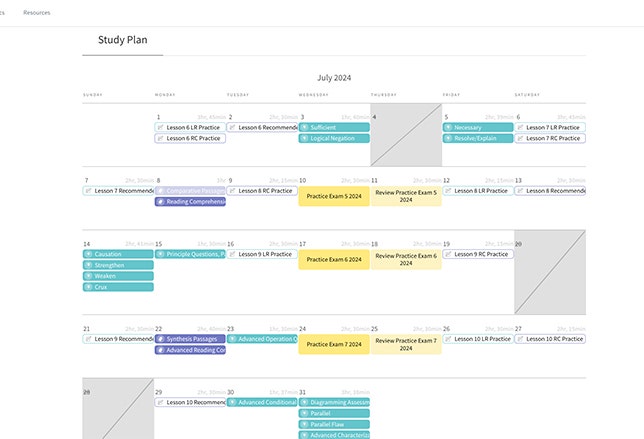
Our LSAT Study Planner creates a customized study calendar perfectly aligned with your schedule to get you where you need to be by LSAT test day. It integrates your Live sessions with all of your out-of-class assignments so you never fall behind.
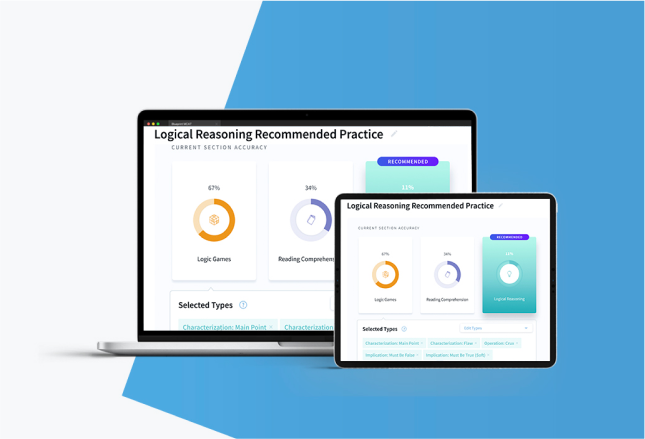
Proven to add 5 points to your score, on average, our AI-driven technology powers our LSAT Qbank, providing you with personalized recommendations based on your performance.** Create smarter practice sets that are customized to pinpoint your weaknesses so you can strengthen them.
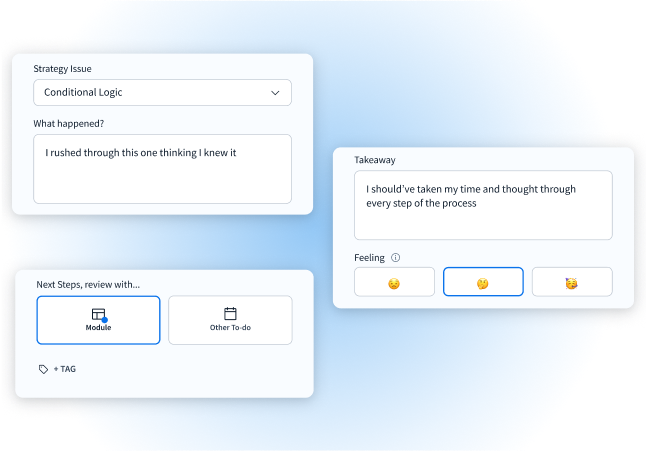
We've got your note taking covered with the Lessons Learned Journal. Create an entry directly from any exam question to identify any strategy issues, document your mistakes, and create action items.

Request a free consultation with one of our experts and a member of our team will contact you within 24 hours.
Complete Request Form

Our Student Success Team is available every day to answer all your questions.
Chat Now or call 888-427-7737In a recent study, qualifying Blueprint Live Course students saw an average 15 point score increase! The study was conducted in the summer of 2021 and included all qualifying students in the Blueprint Live Online Course held July-September. To show earnest engagement with the program and be qualified for the study, students had to take all eight practice tests assigned in the course, have a 75% attendance rate, and must have answered 1,500 questions from the Blueprint question bank (the assigned work in their course Study Plan). For more information, please click here.
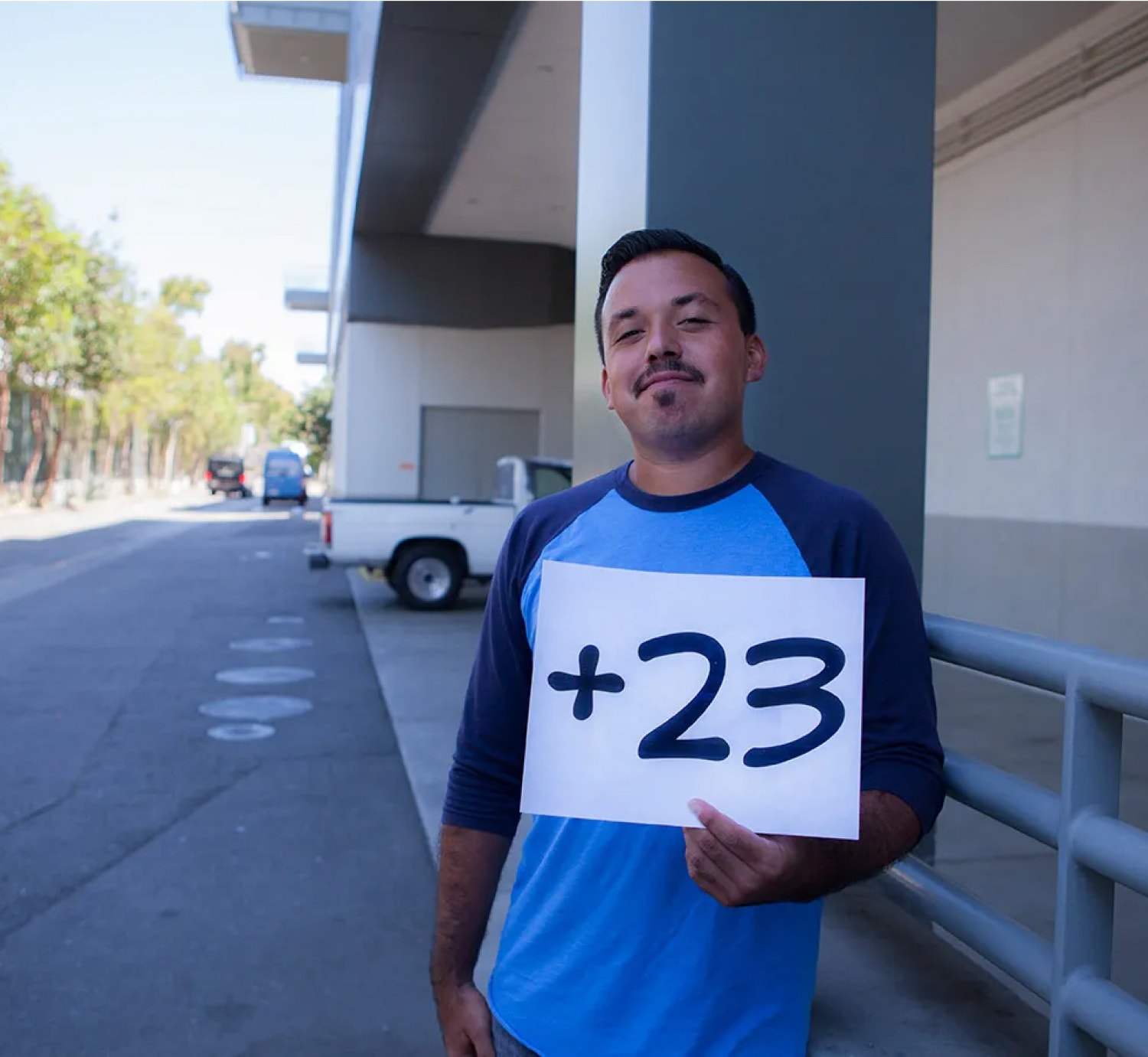
Kendall Z — +17 Point Score Increase
Actual Blueprint Student
*Blueprint students in this study cohort raised their LSAT score by 15 points on average. See details on the study.
**All Blueprint LSAT students since April 2023 who did at least 1,000 questions in the Qbank improved 5 points more than those who did less than 1000 questions.
You will be taken to another Blueprint Prep company site or one of our partners. Do you want to continue?
Request a consultation with an MCAT Advisor, or call 888-530-6398 for immediate assistance.


